
Running a laundry business means keeping track of more than clothes. You have orders to manage, payments to record, customers to update, staff to coordinate, and supplies to monitor. If you operate multiple locations, keeping everything organized becomes even harder.
Laundromat software brings these tasks together in one system. Instead of relying on paper tickets, spreadsheets, and scattered WhatsApp messages, you can manage your daily operations from a central dashboard.
Let’s discuss what a laundromat software does, how it works, the features to look for, and whether it is right for your business.
What Is Laundromat Software?
A laundromat software runs your daily operations from one central dashboard. It is also known as a laundry management software, laundry business software, or laundry POS.
Instead of juggling paper registers, a billing spreadsheet, and scattered WhatsApp messages, you get everything in one place you can open on-site or from your phone. That means you have fewer errors, provide faster service, and have a clear view of what’s happening. It replaces manual guesswork with structured control over your whole operation.
How Does Laundromat Software Work?
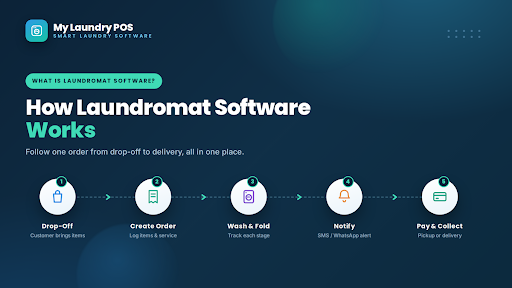
When a customer drops off clothes, you use the software to create the order and record the items and services required. Your team can then update the order as it moves through washing, folding, and other stages. Once it is ready, you can notify the customer, record the payment, and complete the pickup or delivery.
The information from these activities can also feed into your reports, giving you a clearer view of sales, outstanding payments, services, and daily activity.
10 Key Features Of Laundromat Software
The right software should make your daily operations easier, not add another layer of work. These are some of the features that matter the most.
1. Point Of Sale (POS)
A laundry POS brings orders and payments together. You can create orders quickly, pull up returning customer profiles, and keep transactions organized.
During busy periods, your staff can process orders without relying on handwritten tickets or separate records.
2. Order Tracking
Order tracking lets your team follow every order from intake through processing and pickup.
For example, if a customer drops off ten shirts, you can record the order and track it through each stage. When the customer asks for an update, your team can check the software instead of searching through paper tickets.
3. Customer Management
Keep customer profiles, preferences, and purchase history in one place. This helps your team provide more consistent service to returning customers.
If a regular customer prefers starch-free shirts, for example, staff can see that preference when handling their next order.
4. Payment Processing
You can manage billing and payments alongside your orders, including cards, bank transfers, and mobile or online payments, depending on the platform.
Keeping payments connected to orders makes it easier to identify outstanding balances, reduce manual errors, and maintain accurate revenue records.
5. Reports and Analytics
Your business data can help you make better decisions. Reports can show sales, popular services, outstanding balances, and other useful information.
Instead of relying on guesswork, you can use these insights when making decisions about pricing, staffing, and growth.
6. Multi-Branch Support
Managing multiple locations separately can quickly become difficult. Multi-branch support lets you monitor orders, sales, and staff across locations from one account.
For example, an owner with three branches in Lagos can check each location from a central dashboard without visiting every shop.
7. Staff And Role Management
You can assign staff roles, control access, and see who handled specific orders. This improves accountability while helping protect sensitive business information.
8. Inventory Tracking
Monitor supplies such as detergent, packaging, and other materials. Inventory tracking can help you identify low-stock items and avoid unnecessary purchases or running out of essentials during a busy shift.
9. Automated SMS And WhatsApp Alerts
Keep customers updated without requiring your staff to make every follow-up call. Automated alerts can send order confirmations, ready-for-pickup notifications, and payment reminders.
10. Pickup And Delivery Management
If you offer pickup and delivery, you need to keep track of more than the order itself. You also need to know who is handling it and where it is in transit.
Pickup and delivery tools can help you schedule orders, assign drivers, plan routes, and keep the process organized from your customer’s door to your laundry and back again.
Who Needs Laundromat Software?
You don’t need to operate a large chain to benefit. A single-location laundry can also use software to replace manual records and build a more organized operation.
Laundromat software can work for businesses at different stages of growth, including:
- Multi-location owners who need oversight across branches
- Self-service laundromats managing usage, payments, and customer flow
- Hybrid businesses combining self-service, drop-off, and delivery
- Subscription services handling recurring billing
- 24-hour operations that need round-the-clock tracking
- New owners who want structure from day one
How To Manage A Laundry Business In Nigeria
Laundry businesses in Nigeria face practical challenges such as manual billing, cash reconciliation, customer communication, and managing multiple branches.
The software you choose should fit the way your business actually operates. Features such as WhatsApp and SMS notifications, mobile-friendly access, and pricing in Naira can make a significant difference for local operators.
My Laundry POS is designed for real laundry businesses in Nigeria and beyond, to help owners manage orders, automate billing, track payments, and oversee multiple branches from one system. It’s a laundromat software made to serve Nigeria and beyond.
How To Choose The Right Laundromat Software
Before choosing a platform, consider how well it fits your business today and where you want to take it next.
Look for software that:
- Fits your business model, whether you offer sell -service, drop-off, delivery, or subscriptions.
- Includes essential features such as POS, order tracking, payments, and reporting.
- Supports cloud access and multiple locations if you plan to expand.
- Offers reliable support and makes onboarding straightforward.
- Fits your current budget without limiting your ability to grow.
Conclusion
Laundromat software gives you one place to manage the moving parts of your laundry business. From creating orders and tracking payments to managing customers and multiple branches, the right system can reduce manual work and give you better control.
If you’re ready to move beyond paper tickets and scattered records, My Laundry POS gives you the tools to manage your laundry business more efficiently and grow with confidence.
Pingback: Laundromat Management Software vs POS Software - Which Is Better?